
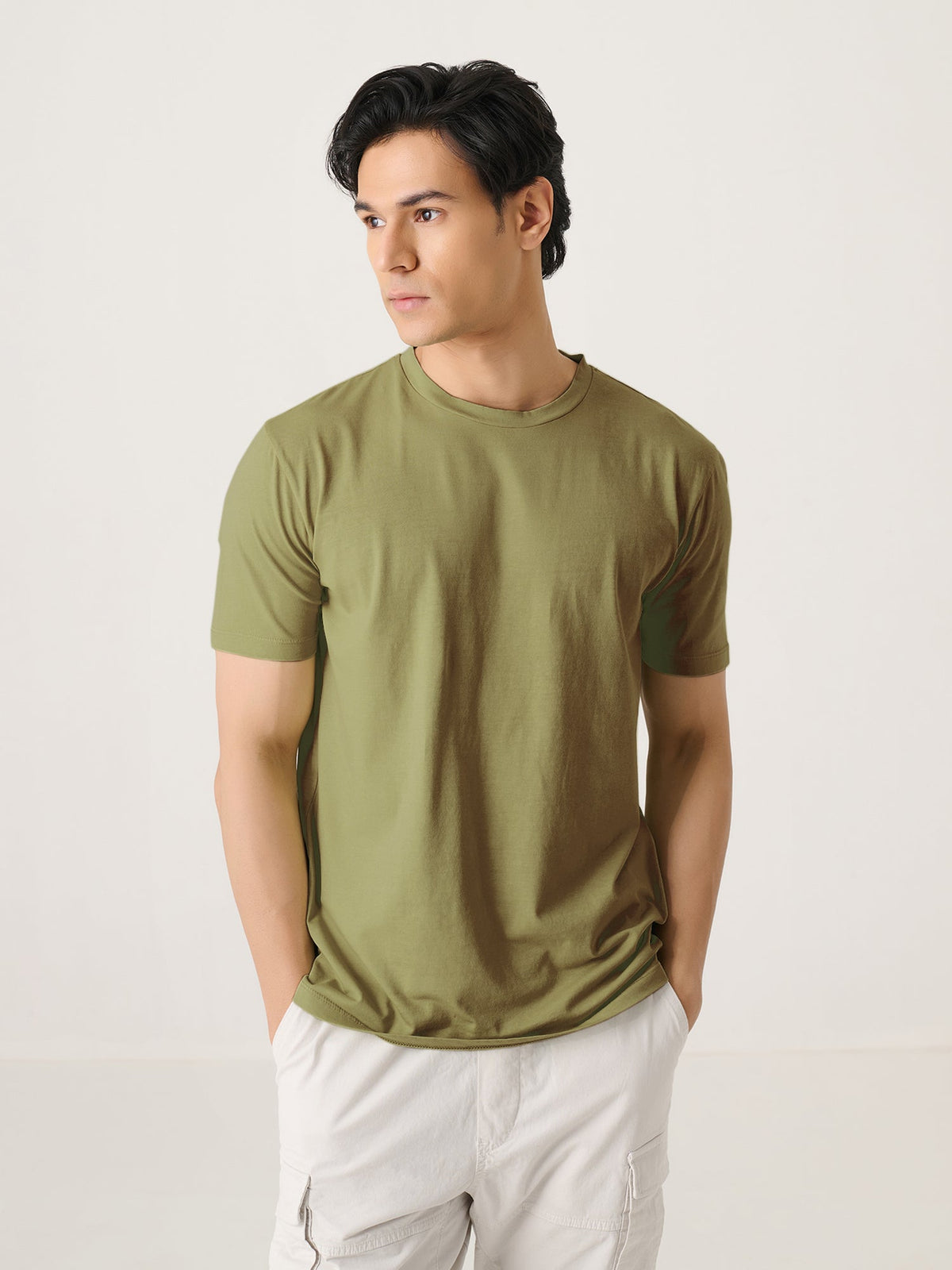
By Shivaan Seth, Founder
I've been wearing T-shirts like these for about fifteen years, long before Better Basics existed. So I already knew what a good basic should feel like, and how often they let you down. You buy a plain T-shirt, love it for a month, then watch it turn grey, lose its shape, and slump to the back of the drawer.
Here is what most people don't realise: India makes the fabric and the garments for a lot of the premium global brands you already know. The same mills, the same dyers, the same zips and trims. We just rarely get to buy that quality ourselves, cut for how we actually dress. Better Basics wasn't created to sell clothes. It was created to fix that.
Because a basic is the hardest thing to make and the easiest to take for granted. There is no logo to hide behind and no trend doing the heavy lifting. It is just fabric, fit and finish. Get those right and you have made something a person reaches for every week for years. Get them wrong and no amount of marketing saves it.
The simplest pieces are usually the hardest to get right. So here is how I actually think about it: the things that separate a good basic from a bad one, and how you can spot the difference yourself before you buy.
Good basics aren't about trends or hype. They're about getting the details right, and standing by them.
It starts with the fabric, and its weight
This is where most corners get cut, invisibly. Thin yarns, vague blends, whatever costs least that month. You don't see it on the hanger. You feel it after three washes.
We start with natural fibres. Cotton and modal are the foundation of almost everything we make. A cotton blend breathes and wears in beautifully. A cotton modal blend adds a silky drape that makes an everyday T-shirt feel like more than it is. A small amount of stretch keeps the shape honest.
I also believe fabric terms shouldn't sound impressive. They should be understandable. What matters is how something wears, moves and lasts, not how complex it sounds on a label.
Weight matters as much as fibre, and almost nobody talks about it. GSM (grams per square metre) is simply how dense a fabric is. A light everyday T-shirt and a structured heavy T-shirt can look identical in a photo and feel like different garments in your hand:
| Weight | Feel | Best for |
|---|---|---|
| ~180 GSM | Light, fluid, breathable | Everyday T-shirts & tops |
| ~250 GSM | Substantial, structured | Heavy T-shirts that hold their shape |
| ~350 GSM | Dense, warm, cosy | Sweatshirts & winter layers |
Neither weight is "better". Each is right for a different job. The mistake is using a flimsy, low-weight fabric to save money and calling it "lightweight". We reject more fabrics than we pick, precisely so you don't have to experiment with what you wear every day.
Take our heavy cotton, for example. At 250 GSM it is pure cotton, woven from thick yarns for real structure, and still breathable despite the weight. For some people it is the only T-shirt they will reach for. The way I think about it, a regular T-shirt is for when it is hot, busy and you are moving, while a heavy cotton T-shirt is for when you want structure without trying very hard. Same idea, two different jobs, and that is exactly the point.
Then the fit, cut for a real body
A basic lives or dies on fit. Off-the-rack "standard" sizing is often drawn for a body that isn't yours. We cut for true Indian fits, and we care just as much about shape retention. The small amount of stretch, and the way a piece is built, mean it doesn't bag at the elbows or sag at the neck after a few wears. A good basic still looks like itself on wash twenty. A bad one stretches out on day three and never recovers.
The finish, where quality quietly hides
Construction is the part you can't see in a product photo but feel every single day. Even seams. A neckline that doesn't twist. Hems that lie flat. Stitching that survives the laundry. We make everything in our own workshop in Noida and check our pieces by hand before they ship. When you own every step, nothing gets quietly cheapened to hit a price.
Does it last? The honest test is months of wear, not day one
Any basic looks fine in the store. The real question is how it looks after a month in your laundry. Cheap ones fade to grey, pill, and lose their shape. Our standard is simple: a piece should still look right after months of wear, with colour deep and shape intact, not just on the day it arrives. How you wash it matters too, and a little care goes a long way. (More on that in our garment care guide.)
And finally, honesty
No inflated "MRP" marked down to fake a discount. No fabric named to sound fancier than it is. Our approach has always been simple: make it well, price it fairly, and let the product earn its place. A good basic doesn't need a sale to be worth it.
How to spot a good basic: a quick checklist
- Feel the weight. Substantial in the hand, not papery or see-through.
- Check the fibre. Natural fibres like cotton and modal, suited to how you'll wear it.
- Inspect the seams and neckline. Even stitching, flat hems, a neck that doesn't twist.
- Test the recovery. Give it a gentle stretch. It should spring back, not stay baggy.
- Read how it wears. Reviews and care notes tell you what happens after many washes.
- Be wary of huge "discounts." A fair price beats a fake markdown every time.
Frequently asked questions
What does GSM mean in clothing?
GSM stands for grams per square metre. It is how much a fabric weighs for its size, which tells you how dense it is. Higher GSM generally means a heavier, more structured fabric. Lower GSM means lighter and more breathable.
Is a higher GSM always better?
No. The right GSM depends on the garment. A breezy summer T-shirt wants a lighter weight. A structured heavy T-shirt or a sweatshirt wants more. "Better" is whatever suits how you will wear it.
Which fabric should I choose: cotton blend, cotton modal blend, or heavy cotton?
It comes down to what you want from the piece. For breathable, easy everyday wear, a cotton blend is hard to beat. If you want a silkier drape and a more premium feel, go for a cotton modal blend. And when you want structure and a substantial, hard-wearing T-shirt, choose heavy cotton. All three are made to last, so the right one is simply the one that suits how you will wear it.
How do I make my basics last longer?
Wash cold and inside out, skip the dryer when you can, and don't overload the machine. Small habits add years. Our garment care guide has the details.
That is the whole idea behind Better Basics: basics done properly, so you stop replacing them. If you want to see where we put all this into practice, start with the women's or men's range, or read more about the fabrics we use.
Shop this guide


Related guides: What GSM means in T-shirts · Cotton blend vs modal vs heavy cotton · How to find your size: an Indian fit guide
Shivaan


Leave a comment
This site is protected by hCaptcha and the hCaptcha Privacy Policy and Terms of Service apply.